Why Volcano Bay Doesn’t Feel Like Any Other Water Park
The first time the volcano lights up, you stop whatever you’re doing and stare. It’s late afternoon, the Florida sky is going gold, and Krakatau — a 200-foot man-made volcano standing dead center in the park — begins to bleed lava down its sides while waterfalls cascade and the whole structure glows orange against the dusk. People at the wave pool turn around. Kids point. For a moment, a water park feels like a movie set. That’s the thing about Universal’s Volcano Bay: it was never built to be a place where you go down a slide and stand in a line. It was built to be a destination, a fully themed Polynesian island fantasy with the most ambitious water-park theming in Orlando.
I’ve spent more days here than I can count, in every season and every crowd level, and I’ll give you the honest version: Volcano Bay is gorgeous, genuinely thrilling, and occasionally maddening. The slides are some of the best in the country. The atmosphere is unmatched. But there’s a parking-and-shuttle situation that catches first-timers off guard, and 2026 brings two major changes you absolutely need to know before you book — the retirement of the famous TapuTapu wristband and a months-long closure starting in late October. This guide covers all of it, honestly, so you arrive knowing exactly what you’re walking into.
Volcano Bay is one of three water parks worth comparing in Central Florida, so if you’re still deciding where to spend your splash day, our Orlando water parks guide lays them all side by side. For Universal newcomers, the broader Universal Orlando guide puts this park in context with the dry parks.
The Big 2026 Change: TapuTapu Is Gone
For years, Volcano Bay’s signature feature wasn’t a slide — it was a wristband. Every guest received a waterproof wearable called TapuTapu, and it ran the entire park. The idea was genuinely clever: instead of standing in a physical line for a slide, you’d tap your wristband against a totem at the entrance of an attraction, and TapuTapu would hold your place in a virtual line. You were then free to float the lazy river, grab lunch, or hit the wave pool while you “waited.” When your turn came up, the band buzzed on your wrist and lit up, telling you to head over and ride.
The system had two modes that confused a lot of first-timers, so here’s the short version for posterity. If a slide showed “Ride Now,” you could walk straight up and ride immediately — no virtual reservation needed, and it didn’t burn your existing hold elsewhere. If a slide had a wait, you tapped the totem to join its virtual line, and you could only hold one virtual reservation at a time; tapping a new totem erased the old one. TapuTapu also unlocked playful interactive features around the park — tap a totem and water cannons would fire, or images would appear in the “story” pools.
As of October 1, 2025, all of that is over. Universal retired the TapuTapu wristband and the virtual-line system entirely. Guests no longer receive a wearable at the gate, and every attraction now runs on standard, first-come-first-served standby queues — exactly like any other water park. You walk to a slide, you join the physical line, you wait your turn. Universal’s official guidance now simply says guests “can access attraction queues at their leisure.”
Why the change? Universal never spelled it out, but the complaints had piled up for years: virtual waits that ballooned to two or three hours on busy days, wristbands that slipped off on the rougher rides, and persistent tech glitches. For most guests, honestly, the switch to standby is a relief — the experience is now predictable and easy to understand. The catch is that the old strategy is dead. You can no longer “bank” a long ride while you enjoy the pools, which means your arrival time and the order you hit the headliners now matter more than ever. I’ll cover exactly how to play that later.
The Layout: A Volcano and Three Villages
Volcano Bay is organized around the Krakatau volcano in the center, with three themed “villages” radiating out from its base. Knowing the geography saves you a lot of wandering with wet feet on hot pavement.
The Krakatau Volcano (the center)
The 200-foot volcano is both the visual landmark and home to the park’s two marquee thrill rides. By day, waterfalls pour down its flanks; after dark, it “erupts” with glowing lava effects. Inside and around its base you’ll find the Krakatau Aqua Coaster and the Ko’okiri Body Plunge — more on both below.
Wave Village
This is the relaxation-and-beach heart of the park, anchored by Waturi Beach, the enormous wave pool that sits right at the volcano’s feet. It’s where most of the prime cabanas live, where the calmer Puka Uli Lagoon offers gentler water, and where the Ohyah and Ohno Drop Slides launch riders off short, punchy drops into a splash pool.
River Village
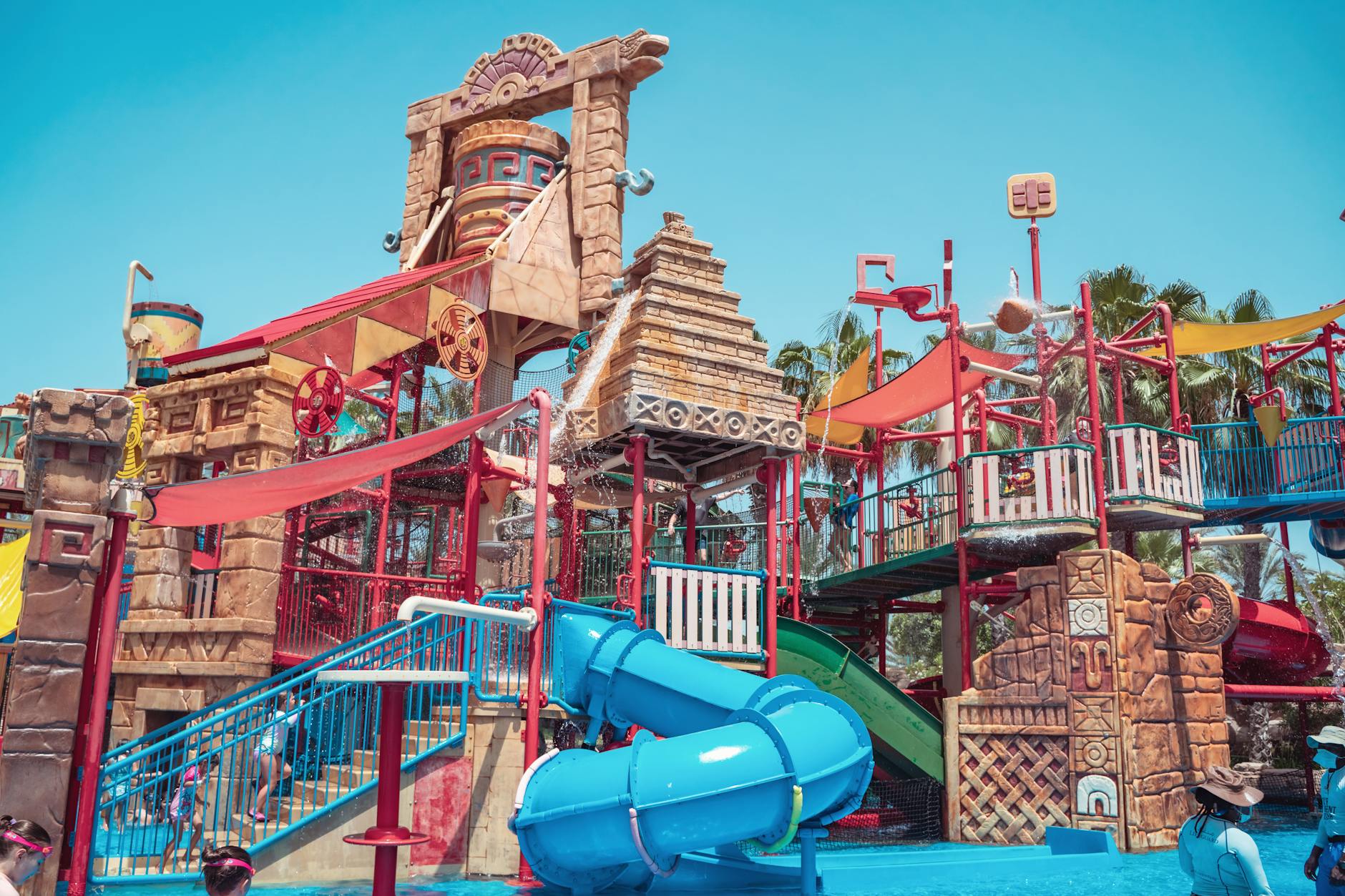
The family core of the park. River Village holds the Kopiko Wai Winding River (the lazy river that drifts through a dark, effect-filled cave inside the volcano), the multi-passenger Honu ika Moana raft slides, and the park’s two excellent kids’ areas — Tot Tiki Reef for toddlers and the three-story Runamukka Reef water fortress.
Rainforest Village
The thrill-seeker’s corner, tucked into lush landscaping on the far side of the volcano. This is home to the Maku and Puihi round-raft rides, the Kala and Tai Nui Serpentine Body Slides, the Punga Racers mat slides, and the unmissable TeAwa the Fearless River — a churning whitewater rapids river that’s the polar opposite of “lazy.” If you live for the intense stuff, you’ll spend most of your day back here.
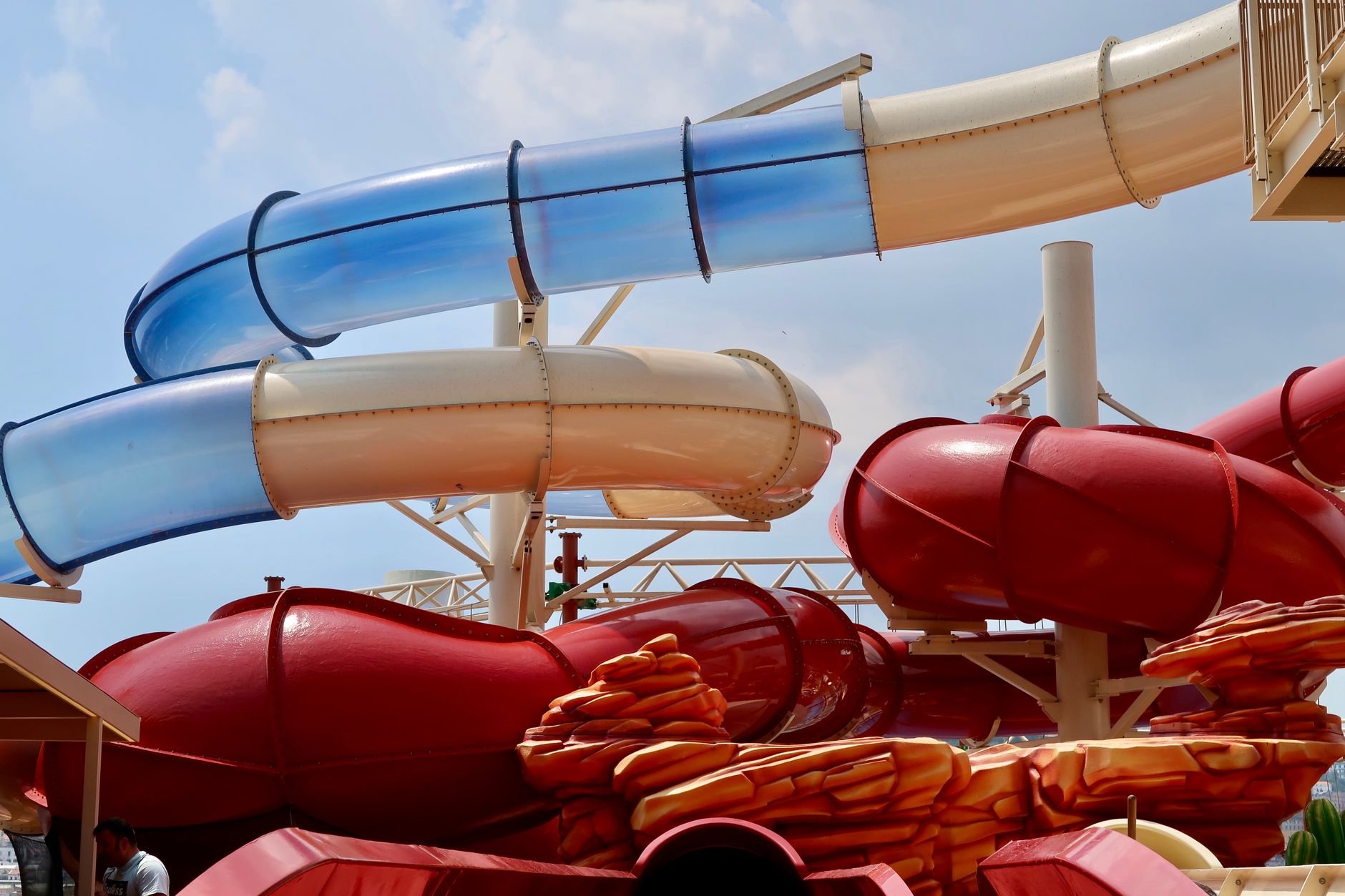
The Rides by Thrill Level
Here’s the full slate, sorted by how much your stomach will object. Height requirements are the single biggest planning factor for families, so I’ve included them — if you’re traveling with little ones, cross-reference our guide to Orlando theme parks with kids before you set expectations.
| Attraction | Type | Thrill Level | Height Req. | The Honest Take |
|---|---|---|---|---|
| Ko’okiri Body Plunge | Body slide | Extreme | 48″ | The tallest, scariest slide in the park. A trap door drops out from under you into a 125-foot, near-vertical (70-degree) plunge straight through the volcano. Genuinely terrifying. The line is always long. |
| Krakatau Aqua Coaster | Water coaster | High | 42″ | The park’s signature ride and the only true water coaster. Linear-induction motors blast your canoe-style raft uphill through the volcano’s interior and out through a waterfall. The best ride in the park — and the longest standby wait. |
| Kala & Tai Nui Serpentine Slides | Body slides | High | 48″ | Twin enclosed body slides with a trap-door drop start, twisting around each other. Fast, dark, disorienting in the best way. |
| Ohyah & Ohno Drop Slides | Body slides | High | 48″ | Two open body slides that fling you off a drop — Ohno’s is taller (about 6 feet above the water). You hit the pool with a real splash. Short, punchy, repeatable. |
| Maku & Puihi Round Raft Rides | Group raft | High | 42″ | Five-person rafts. Maku is the (slightly) tamer “saucer” ride; Puihi rockets through a dark tunnel into a giant funnel with a moment of zero-gravity hang-time. Puihi is a thrill. |
| Punga Racers | Mat racing | Moderate | 42″ | Four-lane head-first manta-mat racing slides through enclosed tubes. Competitive family fun. |
| TeAwa the Fearless River | Action river | Moderate | 42″ | A high-speed whitewater rapids river. Mandatory life vest, churning current, choppy waves. Not relaxing — and that’s the point. |
| Honu ika Moana | Group raft | Moderate | Honu 48″ / ika Moana 42″ | Two raft slides sharing a tower. Honu sweeps riders high up two banked walls; ika Moana is the gentler family option. Good crossover ride. |
| Taniwha Tubes (Tonga & Raki) | Raft slides | Moderate | 42″ | Four Easter-Island-themed tube slides, ridden solo or in pairs, each with a different path of twists and dark stretches. |
| Kopiko Wai Winding River | Lazy river | Relaxed | None (under 48″ needs vest) | The classic lazy river, drifting through a starry cave inside the volcano with surprise effects. Pure float-and-chill. |
| Waturi Beach | Wave pool | Relaxed | None | The giant central wave pool at the volcano’s base. Waves on a cycle, sandy zero-entry edge. |
| Runamukka Reef | Kids’ play structure | Kids | None | Three-story water playground with small slides, sprayers, and dumping buckets for older kids. |
| Tot Tiki Reef | Toddler splash zone | Toddlers | None | Shallow, gentle splash area with tiny slides and fountains for the smallest guests. |
The two rides you can’t miss
If you only have time and nerve for two, make them the Krakatau Aqua Coaster and the Ko’okiri Body Plunge. The Aqua Coaster is simply unique — there’s nothing else like being launched uphill through the inside of a volcano, and the ride photography lighting is wild. The Ko’okiri is the bucket-list scare: you stand on a clear trap door, the attendant counts down, and the floor vanishes. It’s over in seconds but you’ll feel it for an hour. Both consistently draw the park’s longest standby waits, which is exactly why you ride them first.
Rivers and the Wave Pool: Lazy, Fearless, and Everything Between
Volcano Bay does something smart — it gives you two rivers with completely opposite personalities. The Kopiko Wai Winding River is the gentle, slow-moving lazy river that loops around River Village and slips into a darkened cave beneath the volcano lit with stars and surprise water effects. Grab a tube, lean back, and let it carry you. It’s the single best way to cool off and decompress between adrenaline rides.
Then there’s TeAwa the Fearless River, and the name is not marketing fluff. This is an “action river” — a fast-moving stretch of artificial whitewater with rapids and standing waves that bounce you around. A life vest is required, and you’ll want one; the current is strong enough that this is genuinely an attraction, not a relaxation lap. Families with confident swimmers love it. It’s not for tiny kids or anyone looking to lounge.
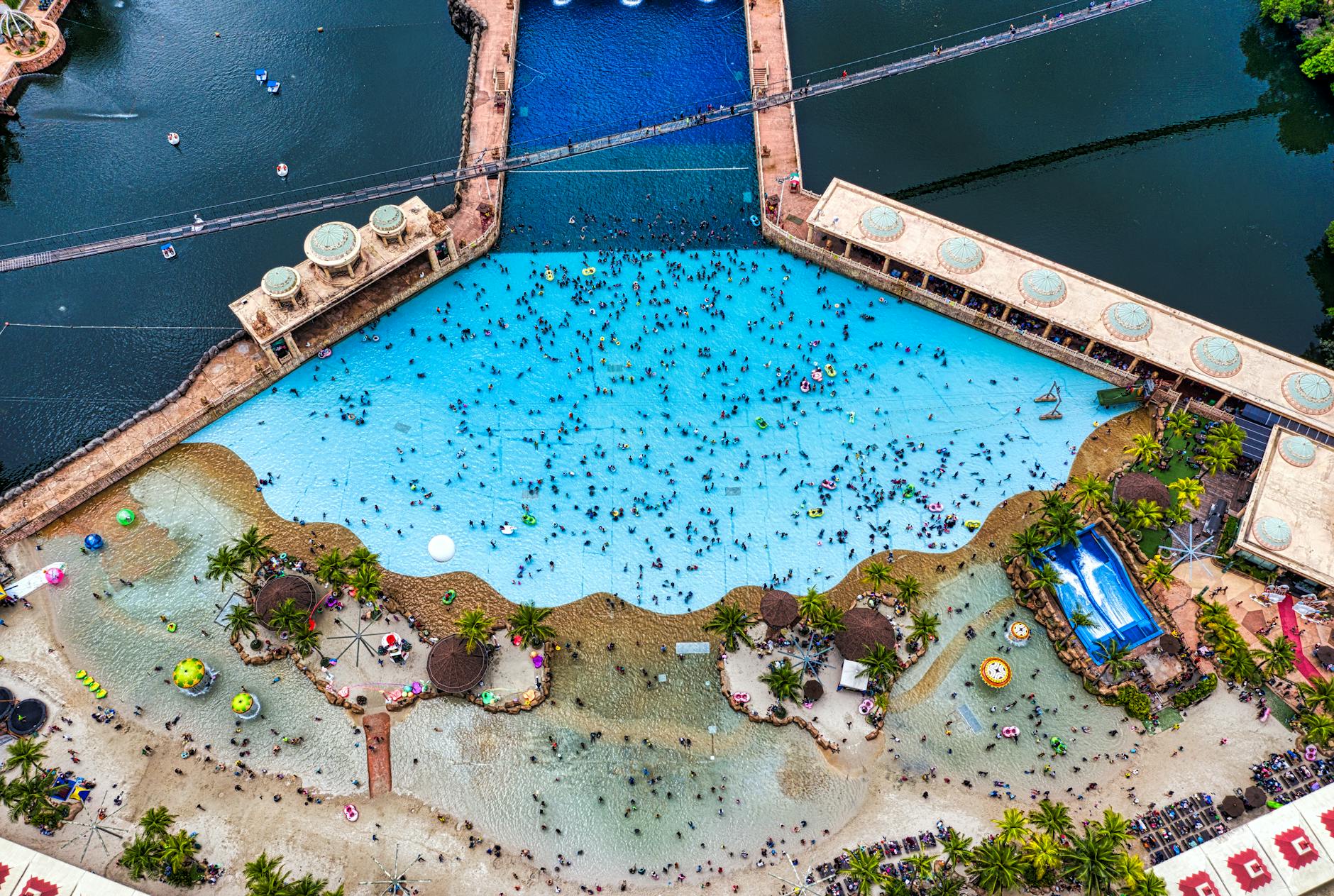
Waturi Beach ties the whole park together. It’s the massive sandy-edged wave pool sitting directly at the foot of Krakatau, so when the waves kick on and the volcano looms overhead, it’s the most photogenic spot in the park. The zero-entry shoreline means non-swimmers can wade, while the deeper end gives the waves room to swell. Claim a free lounger near the beach early — they vanish fast on busy days.
For the Kids: Tot Tiki Reef and Runamukka Reef
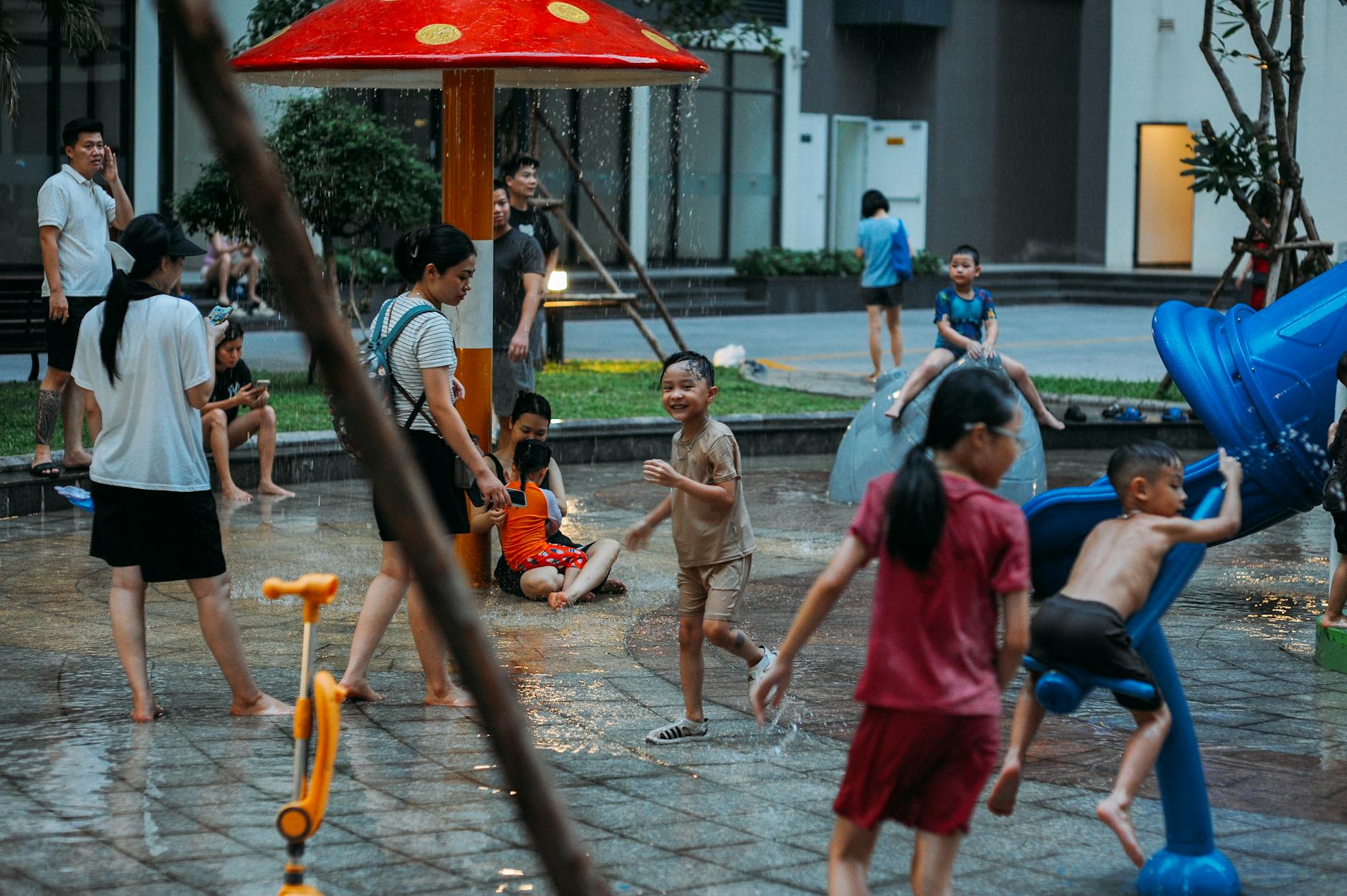
Volcano Bay genuinely delivers for families with young children, and both kids’ areas sit conveniently together in River Village near the calmer pools. Tot Tiki Reef is the toddler zone — shallow, soft, and gentle, with mini slides, spraying fountains, and a small spouting volcano scaled for the littlest guests. Runamukka Reef is the step up: a three-story interactive water fortress inspired by reef and tide-pool life, packed with twisty kid-sized slides, water cannons, sprayers, and the obligatory giant dumping bucket that soaks everyone below.
One detail parents should know: any guest under 48 inches must wear a complimentary life vest in the rivers and certain pools, and vests are free to borrow throughout the park — there’s no need to bring your own. For a broader picture of which Universal attractions suit smaller kids across the resort, see our guide to the best rides for kids at Universal.
Cabanas, Loungers, and Where to Sit
Volcano Bay offers free seating, but “free” and “available” are two different things on a hot Saturday. Complimentary loungers are scattered throughout all three villages on a first-come basis, so the move is simple: arrive at opening and stake your spot immediately. Send one person to grab chairs while another joins the first ride line. By mid-morning on a busy day, the best shaded loungers near Waturi Beach are gone.
If you want a guaranteed home base, Volcano Bay rents private and premium seating in tiers. The big-ticket option is a private cabana, available in one- and two-story styles, sleeping up to six to eight people. Cabanas come with cushioned lounge seating, a stocked mini-fridge with bottled water, a snack basket, a locking storage box, plush towels, and — the real luxury — a dedicated attendant who takes your food and drink orders so you never queue for lunch. Pricing swings hard with demand: expect roughly $400 on an off-peak weekday, climbing toward $900+ on peak holiday weekends like Memorial Day. There’s also a mid-tier premium seating option (padded loungers with a lockbox and shade) at a lower price if a full cabana is overkill.
My honest verdict: a cabana is a splurge, but on a hot, crowded summer day with a family, the shade, the locked storage, and skipping the lunch line genuinely transform the experience. On a cooler or quieter day, free loungers are perfectly fine. For more lounger-claiming tactics that apply across every park, our Orlando water park tips are worth a read.
Dining and What You Can Bring
Food at Volcano Bay is better than the typical water-park hot-dog fare. The main quick-service spots — Kohola Reef Restaurant near the volcano and Bambu in Rainforest Village — serve burgers, ribs, fish, poke-style bowls, and big shareable plates, while Whakawaiwai Eats handles pizza and casual bites. Scattered carts sell turkey legs, churros, and the park’s famous frozen drinks. The bars — the Kunuku Boat Bar and Dancing Dragons — pour cocktails right at the water’s edge, and Universal’s signature volcano-themed frozen concoctions are practically a souvenir in a cup.
The park is fully cashless, so bring a card or use mobile pay; an annual passholder discount applies at most locations. Importantly, Universal allows you to bring in your own food and non-alcoholic drinks as long as they fit reasonable size limits and don’t require heating — no glass containers and no alcohol. A small soft-sided cooler of snacks and waters is a smart budget move; pair it with the strategies in our water park tips guide to keep a family day affordable.
Getting There: The Parking and Shuttle Reality
This is the single biggest thing first-timers get wrong, so read carefully. You cannot park directly at Volcano Bay. The park has no guest parking lot of its own. Instead, you park in Universal Orlando’s main parking garages (the same structures that serve Universal Studios, Islands of Adventure, and CityWalk), then walk to the ground level and board a complimentary shuttle bus that loops over to the Volcano Bay entrance. Coming back, you reverse the process.
Budget extra time for this. Between parking, walking through the garage, waiting for a shuttle, and the ride itself, you can easily add 30 to 45 minutes to your arrival — more on a packed morning when shuttle lines back up. The standard Universal parking fee applies (it runs around $30+ for standard self-parking in 2026, with preferred and valet costing more), and there’s no separate Volcano Bay parking charge. The full breakdown lives in our Universal Orlando ticket prices guide.
The shortcut that sidesteps all of this: stay at a Universal hotel. Several resorts — most notably Cabana Bay Beach Resort, which sits right next door — offer walking paths or direct bus service to Volcano Bay, letting you skip the garage-and-shuttle shuffle entirely. If you’re weighing where to stay, our roundup of hotels near Universal Studios flags the ones with the easiest Volcano Bay access.
Tickets: How Volcano Bay Fits In
Volcano Bay requires its own admission — it is not automatically bundled with a Universal Studios or Islands of Adventure ticket. A single-day adult ticket runs roughly $80 to $110 in 2026 depending on the date, with seasonal demand pricing in full effect. The smarter buy for most visitors is a multi-park ticket: Universal sells 2-park and 3-park options where adding Volcano Bay to your park-to-park days is significantly cheaper per day than buying the water park alone. If a water day is part of your plan, building it into a multi-day, multi-park ticket almost always wins on value. We break down every combination in the Universal Orlando ticket prices guide.
The Real Strategy for Shorter Waits
With TapuTapu gone and everything now on standby, your day lives and dies by timing. Here’s exactly how I’d play it in 2026:
- Arrive before the gates open. This matters more than any other tip. Be parked and through security ahead of the official opening so you’re among the first wave. The shuttle adds time, so build in a buffer.
- Hit the two headliners first. Make a beeline for the Krakatau Aqua Coaster and Ko’okiri Body Plunge the moment you’re in. Their lines are short for maybe the first 45 minutes and brutal by midday.
- Work the Rainforest Village thrill rides next. Maku & Puihi, Kala & Tai Nui, and the Taniwha Tubes all build long lines later, so knock them out in the morning while crowds are still drifting to the wave pool.
- Save the rivers, wave pool, and kids’ areas for midday. These have effectively unlimited capacity and no real “line,” so they’re your perfect heat-of-the-day, peak-crowd activities. Float Kopiko Wai while the slide lines are at their worst.
- Re-ride the headliners in the last hour. Lines drop sharply as families with young kids head out before closing. The late-afternoon and evening window — when the volcano starts to glow — is the best of the day for both short waits and atmosphere.
- Go on a weekday in shoulder season. Crowds spike in summer and on weekends. A weekday in spring or fall is dramatically quieter and more comfortable than a July Saturday.
Summer is when this park hits hardest on crowds and heat — if a July or August visit is in your future, read our Orlando theme parks in summer guide for survival tactics that apply double at a water park.
The Other 2026 Headline: Volcano Bay Closes for Refurbishment
Mark this on your calendar before you book a trip. Volcano Bay is scheduled to close for a major seasonal refurbishment from October 26, 2026, through March 24, 2027. That’s roughly five months — the longest planned closure in the park’s history — and during that window the park is entirely shut to guests. If your Orlando trip falls in late fall or winter 2026-2027, Volcano Bay simply will not be an option, and you’ll want to plan a dry-park itinerary or consider Aquatica Orlando as your water-park alternative. The park is expected to reopen for spring 2027 with refreshed facilities. Always double-check Universal’s official calendar close to your dates, as exact reopening timing can shift.
Who Volcano Bay Is Best For
Volcano Bay is the right pick if you want the most immersive, beautiful water park in Orlando and you have at least one genuine thrill-seeker in your group. The theming is in a class of its own, the headliner slides are bucket-list intense, and the mix of relaxed rivers, a knockout wave pool, and excellent kids’ zones means a family can genuinely spread out and find their own pace. It pairs naturally with a Universal multi-day trip.
It’s a weaker fit if you’re chasing the absolute most slides per dollar, if you can’t stomach the parking-and-shuttle logistics, or if your trip lands inside the refurbishment window. Animal-loving families might prefer the marine theming at Aquatica. But for sheer wow-factor and a do-everything water day, Volcano Bay remains the most spectacular water park in town — and watching that volcano light up at dusk is a memory that sticks.
Frequently Asked Questions
Does Volcano Bay still use TapuTapu wristbands in 2026?
No. Universal retired the TapuTapu virtual-line wristband on October 1, 2025. Every attraction now uses a standard, first-come-first-served standby line. You no longer receive a wearable at the entrance, and there are no virtual return times — you simply walk up and join each slide’s physical queue.
Can I park directly at Volcano Bay?
No. There is no guest parking lot at Volcano Bay. You park in Universal Orlando’s main parking garages and take a free shuttle bus to the park entrance. Plan for an extra 30 to 45 minutes each way. Staying at a Universal hotel — especially neighboring Cabana Bay Beach Resort — lets you skip the garage-and-shuttle routine.
What is the tallest, scariest slide at Volcano Bay?
The Ko’okiri Body Plunge. It’s a 125-foot, near-vertical body slide with a trap-door start that drops you straight down through the Krakatau volcano. It has a 48-inch height requirement and is the most intense attraction in the park. The Krakatau Aqua Coaster is the signature ride but is far less terrifying.
When is Volcano Bay closing for refurbishment?
Volcano Bay is scheduled to close for a major refurbishment from October 26, 2026, through March 24, 2027 — about five months. The park will be fully closed during that period and is expected to reopen in spring 2027. Always confirm dates on Universal’s official calendar before booking a late-2026 or early-2027 trip.
Is Volcano Bay included with my Universal park ticket?
Not automatically. Volcano Bay requires its own admission. A single-day adult ticket runs roughly $80 to $110 in 2026. However, Universal offers multi-park tickets that bundle Volcano Bay with Universal Studios and Islands of Adventure, which is far better value per day if you plan a water-park visit. See our Universal ticket pricing guide for the options.
Can I bring my own food and drinks into Volcano Bay?
Yes, within limits. Universal allows guests to bring in their own food and non-alcoholic, non-glass beverages that don’t require heating — a small soft-sided cooler of snacks and waters is fine. Alcohol, glass containers, an